-->

May 7, 2012

Musings: 2012 Volkswagen Jetta Sportwagen

The Volkswagen Group really takes to heart the "Reduce, Re-use, Recycle" slogan. Just look at how, in 2011, Volkswagen Reduced drastically the number of work-related E-mails their employees have to endure outside of regular working hours, in the name of work-life balance.

In 2009, in response to sales that had slowed down considerably in the financial crisis, Volkswagen chose to Reduce work hours for its assembly staff rather than laying them off. Sounds civilised to me.

The group states that eventual Recycling of its vehicles is part of its design process, and claims a 95% material recovery rate for end-of-life vehicles.

But where they really shine is at Re-use. In the last few decade or so, the Volkswagen Group have really perfected the art of developing a vehicle platform that appeals to a broad audience, and then using that same platform for a spate of models across the four brands under their umbrella: Audi, Volkswagen, SEAT, Škoda.

For instance, the A5 platform, also known as PQ35, is the basis for some twenty models in the family. Its range include such familiars as the Audi TT, Audi A3 and the VW Beetle, as well as models that haven't (yet) made it to the US, such as the feisty but frugal Audi Q3, the newly re-introduced VW Scirocco, and the sensible Škoda Octavia, as well as several good-looking models in the SEAT lineup.

One of the models with this platform is the VW Jetta Sportwagen, which itself is a paragon of Re-use: a model that works across the planet. It is variously known as the Golf Variant in continental Europe, the Golf Estate in the UK, the Golf Sportwagen (formerly the Bora Sportwagen) in Mexico, and the Jetta Variant in Brazil and the Vento Variant in Argentina.

"Vento"? -- Well, you see, "vento" is Italian for "wind", which is in line with the Volkswagen custom of naming its cars after prevailing winds. Never mind that they speak Spanish in Argentina.

Maybe they ran out of appropriate winds for naming their vehicles, which has to be done with great care. It won't do to name a car "Zephyr", unless maybe you plan to market it to a super-laid-back audience. And my own guess is that we will not soon see a German car named after the Ghibli, the Saharan wind that brings dry and hot air to Lybia.

[I culled that last name from a fascinating list of named winds at Wikipedia. The Dutch page, that is. Those who originally used windmills to make half their land area habitable would be interested in wind.]

But back to the Jetta Sportwagen: what can I say? It's just like the Golf, only longer in the back by about 14 inches. It comes with the same range of engines. It even has pretty much the same front as the Golf.

I put the cello in the back, and saw that the trunk was cavernous. Could easily hold two cellos; now that I have started taking cello lessons myself, a second cello in the house (and in the car) is a distinct possibility. When you fold down part of the back seat I would guess you could move a string bass in this thing.

But then I closed the hatch. No test drive for me: In the US, if you want the Jetta Sportwagen with the 2.0 TDI diesel engine (rather than the 2.5L gasoline engine), you get to buy it with seats that have something on them called "V-tex leatherette". VW calls it an upgrade from the cloth upholstery. I suppose it looks sort of like leather. I have no idea what it is exactly, but it exuded a "new car smell" that was overwhelming.

Pity: this car would have worked rather gloriously with leather seating (available for the Golf Variant in Europe). It would even have worked with the presumably less expensive cloth upholstery that comes in the regular Golf. But the smelly fake leather? No thanks. Not even a test drive.

April 29, 2012

Go Away

What I really mean is, please join me (and thousands of families) for Screen Free Week 2012. Turn off your screens and turn on Life. Ditch the commercials.

Think of it as a Digital Detox, the way you might eat fruit only, for a week, as a food cleanse, to give your body a break from all the sugar, fats, meat and other hard-to-digest ingredients of our modern diet.

This year, Screen Free Week is happening 30 April to 6 May. It was originally named TV-Turnoff Week, but has been expanded to include all the screens from which it seems so hard to tear ourselves away.

I know: for some of us it is impossible to go completely screen free: the screen might be part of our job description, moms need to receive timely mesages from school, and so on. But we can at least cut our screen time to the absolute minimum, cut all "recreational" use and focus our eyes at infinity instead of at 24 inches.


I'm looking forward to:

Use a few muscles other than the ones in my thumbs or index finger.

Bake bread; go to the library; garden; generally hang out with my children.

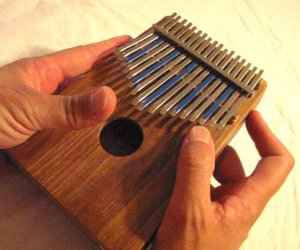
Make music. Mmm - maybe not on a kalimba.

Do spring cleaning. In my case that's good for a Screen Free Month.

Go outside: barbeque - biking - badminton

Have a date with my mate.

Meet some neighbours.

Maybe even build a cello box.

....

What: you're still here?
Go away: let's get moving. Enjoy your screen-freedom, see you when it's over, May 7. Or not. We might like it so much we'll decide to extend our screen vacation.

April 25, 2012

Review: 2012 Audi A3 Sportback

My dad has a friend in Germany, a mechanical engineer who is also an outstanding cook. He once treated my family to an eye-opening preparation of trout, with the even more eye-opening explanation that he wanted to share a particular bottle of Pouilly Fuissé with us, and that he had chosen the trout recipe to go with it. It was the first time I had seen anyone choose the food to accompany the bottle of wine.

Perhaps the automotive equivalent of that would be to choose the engine first, and then the skin to go with it. In that spirit, my search for a family car had started to form a vortex around the frugal 2.0L TDI diesel engine fielded by the Volkswagen Group (who don't offer the even more frugal 1.6L TDI in the US).

The 2.0L TDI is part of a platform shared by the Audi A3, the VW Golf, as well as the Golf Variant, known in the US as the Jetta Sportwagon. Indeed, a whole family of models including the VW Beetle, the Škoda Octavia and the SEAT Altea. What drew me to the A3 was the option of leather seats, which may help avoid the toxic outgassing of synthetic car interiors, so I went to visit the local Audi dealer.

What is designated the A3 in the US is actually the A3 Sportback, a five-door hatchback that's slightly longer overall (by 4 inches) than the Golf but less large than the Jetta Sportwagon. A cello might fit in the A3's trunk more comfortably than in the back of a Golf, so I brought the cello to the dealership to check the fit.

As it turned out, I never did find out. Just asking for the A3 started me off on the wrong foot: the dealer told me that they had none on the showroom floor, and none on the lot to show, having sold out their stock to the last specimen.

I thought to myself that either that was not a smart move on the part of the dealership, or someone was desperate enough for that last A3 that they made an offer the dealer couldn't refuse. The latter would be in line with the recent popularity of cars in the US that are both small and powered by diesel, judging by the soaring sales numbers. As it was, the best they could do for me was to see if one of their employees personally owned an A3 and whether they might be willing to unlock it for me to see if the cello would fit. Odd that a dealer wouldn't know what his colleagues are driving.

The conversation really went south when I asked about the possibility of buying a diesel A3 with standard transmission. This dealer saw fit to tell me that Audi doesn't make the 2.0L TDI with a standard shift. I'm sorry: even if I weren't CelloMom, who has been avidly researching everything automotive, you still can't tell me that Audi makes an automatic-only version of any of its models. All I have to do is go to audi.de to get the scoop.

Besides, it is only in the US that a shift stick on a dealer lot is like the proverbial needle in a haystack. In the rest of the world, "standard" transmission still means manual, and automatic transmission comes at a premium price.

The audiusa.com site does list only an automatic version of the A3 2.0 TDI, but since they are made in Germany anyway I thought I would inquire about the possibility of shipping an odd one from Ingolstadt with a standard transmission. I mentioned, perhaps foolishly, the advantages: a standard-shift car is less expensive to buy and and its higher fuel economy is friendlier on the planet, which also means it's less expensive to run.

I had expected a firm No. What I got was a lecture on how I couldn't beat, in a standard-shift car, the fuel efficiency of an automatic transmission anyway. Whoa. Perhaps that dealer was having an off day. Perhaps he could tell an upstart mom when he saw one - it's hard to deny I am one. Perhaps he was peeved that the last A3 had been sold and now he has nothing to show this eager customer. (And I had declined to look at the A4, knowing it would be too large for me). For my part I was peeved by his attitude, and I daresay I didn't improve his mood by pointing out to him that it's trivial to find out that in Europe the standard transmission A3 got the coveted "A" label for CO2 emissions, whereas the automatic was good for only a "B". Meaning the standard transmission does beat the automatic for fuel efficiency.

For the record (see table below), Audi's German website shows that for the same trim, the automatic version is € 1,750 ($2,300) more expensive than the manual version, and that its fuel efficiency is lower: 48mpg compared to 53mpg for the manual. These official numbers overestimate the fuel efficiency, which are reported by real-life drivers in the UK to be 38mpg (auto) compared to 44mpg (manual). In the US the specs quote an average fuel economy of 34mpg for the auto transmission, but the EPA test tends to understate the fuel economy of diesel engines.

Since this dealer was insisting that a manual-transmission version of this car does not exist, he couldn't very well accomodate a request for a special import, could he?.

Pity. Unlike CelloDad, I must have that stick. And the next-nearest Audi dealer is nearly an hour away: too far. And that is how our family ended up with a Golf TDI.


I suppose that once small cars come into their own in the US, consumer choice will broaden. As it is, the Audi A3 is offered in the US in just a few choices : two trims, "Premium" and "Premium Plus", and two engines, the 2.0L TDI diesel (auto transmission only) and the 2.0 TFSI gasoline (manual, S-tronic auto or Quattro all-wheel drive).

In contrast, the German page for the A3 Sportback offers a wonderfully bewildering array of possibilities: a total of seventy-five combinations of four trim levels, 1.6L and 2.0L TDI diesel engines, and 1.2L, 1.4L, 1.8L and 2.0L TFSI gasoline engines. Choice of manual transmission, S-tronic auto or Quattro. It's exhilirating just to scroll, and scroll, down the list. This is what I call consumer choice.

It doesn't end there: there are corresponding lists for the three-door A3, the three-door S3, the five-door S3 Sportback, the open-top A3 Cabriolet, the over-the-top RS 3 Sportback. Check it out: have a ball.

I was ready to call the American "Premium" trim designation a choice example of grade inflation, like calling the smallest available coffee cup "tall", but after some digging came to the conclusion that the naming is accurate, and probably comes with a premium price tag attached to it. Here is a list of items that are options on the German A3 page but which come "standard" in the US "Premium" trim, together with the price in Euro.

€ 1750 Auto transmission
€   600 Metallic paint
€ 1680 17" alloy wheels (upgrade from 16")
€ 1655 Leather seats (non sport)

From my quick and probably incomplete peek, here's € 5,685 ($ 7,500) in "options". (Apparently air conditioning is no longer a real option even in Germany: you get it standard.) Remember, the German prices include a hefty tax. But if you decide you can do without any or all of that, too bad: you get to buy it anyway. It's that supersizing trick at work.

Scrolling through the German options, I spied one that I would find sorely tempting: leather upholstery all over the interior (€ 1,015). Getting away from the synthetic materials altogether would be worth it to me. One day I will find out whether or not that is included in the US "Premium" version: but not, I suppose, at my local Audi dealer.


Audi A3 Sportback 2.0 TDI, Auto vs. Manual Transmission.

2.0 TDI S-tronic
automatic
2.0 TDI 6-speed
manual
Type Attraction Attraction
Year 2012 2012
Emissions rating EURO5 "B" EURO5 "A"
MSRP € 28,000 € 26,250
CelloMom Rating
Fuel Economy:
City/Hwy quoted 5.8 / 4.4 L/100km 5.5 / 3.8 L/100km
Avg. quoted 4.9 L/100km (48mpg) 4.4 L/100km (53mpg)
Avg. actual 38 mpg 44 mpg
Engine

2.0L Turbodiesel

2.0L Turbodiesel
Power 140 HP @ 4200rpm 140HP @ 4200rpm
Gears 6-spd Auto 6-spd Manual
Fuel Diesel Diesel
Length, mm(in) 4292mm (168.9 in)  
Width, mm(in) 1765mm (78.5 in)  
Height, mm(in) 1423mm (56.0 in)  
Weight, kg(lbs) 1460kg (3219 lbs) 1435kg (3164 lbs)
Trunk volume, liters(cuft) 370L  
Turning radius, m(ft) 10.7m  
Top speed, kph(mph) 210 kph 210 kph

April 22, 2012

For Earth Day, pledge to turn off your TV

There are really very few "must-haves".

Food & water, shelter, your loved ones nearby, and a few other things. But an trade-in to the latest version of your cellphone? One more shirt to join the two hundred already jostling for space in your closet? "Sport" wheels on your car: the ones that really only make a difference if you actually took the car out on a race track? A particular brand of car?

Think about it carefully: where did you pick up the idea that you "must have" those things? Often you will find that it was planted in your brain (and the brains of your friends) by advertising. Advertising is companies' direct access to that button in your psyche that makes you open your wallet for even the most dubious purchases. It is relentless. And a lot of it comes through television.

So by turning off the TV you block the continual assault on your senses, and your common sense, by that endless string of commercials.

Don't get me wrong: I'm not into "minimalist" living, with one pair of jeans, one sleeping bag and one bowl and spoon. I like my comfort, thanks, and I like a good product. I just prefer to decide on my own just what is a good product, and when (and whether) I need it. I don't need to be told that by a company that makes the product. Besides, in my opinion these days companies are not out to make a product: they're out to make a profit. On us.

Going TV-free does get easier as you get used to it and make a new routine, but it can be tough at first. Especially for children, for whom it is especially important that they get peeled off their screens and booted outside. There is medical research that shows that children who play outside, even just an hour a day, are significantly less near-sighted than children who stay inside. Just for that it's worth it. And there are all the other benefits. Try the Campaign for a Commercial-free Childhood for some ideas on how to start, even if you don't have children.

Every fish-themed picnic bowl you don't buy, every cellphone upgrade that you skip, every short-lived plastic toy you pass by, is a win for the planet. I will contain myself and say nothing about 400HP throbbing gas guzzlers.

Happy Earth Day! Let's make something of it, today, tomorrow, and all the tomorrows.

April 19, 2012

Hoofpicks: not just for horses

I like to move around, and that is why I'm acutely aware of the importance of the sine qua non of my locomotion: my feet. I have difficult feet: very difficult feet. Between the broadness inherited from my dad, and the bunions inherited from my mom, finding a pair of shoes that fit is a major triumph. If the shoes don't fit well, my feet will tell me so, without much subtlety.

Perhaps that's why I'm also acutely aware of the sine qua non of my automotive conveyance: the wheels of my car. Your car can have the smoothest-running purring engine: you'll still get nowhere without a set of wheels that are in good shape. Hence my fixation with tire pressure, and keeping the rims circular.

See this widget? It's a hoof pick. You can get it for less than $2 at any equine supply store. It has a strong rounded point on one side, that you use to pry stones and other sharpies out of the horse's hoof, then you can flip it over and brush off the remaining dirt.

We don't have horses. But we do have a few mud bunnies who tend to pick up the most amazing crud on the bottom of our shoes. City shoes are easy to clean, but for the boots with treads those hoof picks come in real handy.

Turns out they're the perfect tool for prying gravel out of tire treads. Treads on new tires can be up to 1/4" deep, and that much rubber can really get a grip on small pebbles and gravel. Some of those stones have sharp edges, so to be gentle on the tires I like to pry them out, pre-emptively. That also stops the annoying tick-tick you hear at every revolution of the wheel as the protruding part of the stone hits the alphalt.

On a recent fossil-hunting trip, when we drove into a few gravelly quarries, trudged our boots through clay-bottom streams, and brushed dirt off the fossils, we used that hoof pick constantly. I love a multi-purpose tool.

April 15, 2012

How you pay for car features that you don't need

Here's my hypothesis: options packages are the vehicular equivalent of McDonald's supersizing your order of french fries and soda: it means car manufacturers can sell you more bells and whistles, even if you don't want or need them. But you still get to pay for them.

"Can I get my Golf TDI with a sunroof?" It's just the kind of question that brings a big smile on a dealer's face.
"Sure you can," he said, "We have the Sunroof and Navigation Package."

I know about this package: it tacks on $1720 to the MSRP of the car.

"Can I get just the sunroof?" I ask. "I don't need the navigation, for that I've got a husband and two children, and they all know how to read a map."
"Mmmm sorry, it only comes in the package."
"Okay: sorry, but no sunroof for me."

I didn't feel very strongly about the sunroof anyway: it's a nice luxury to have your hair messed up when driving around on a nice day, but I can do without it.

My fellow consumers, doesn't it irk you to be put into a box marked "Sunroof AND Navigation"? How about "Sunroof Sucker"? What if the only way to get a sunroof on your car was to buy the package called "Sunroof and Barbie-themed Neon Pink Upholstery"?

Of course it is cheaper to manufacture cars that come in a small number of variations. But the packages seem to be thrown together almost at random. I mean, just because you want the cold weather package that gives you seat heat, does that mean that you must want the Bluetooth hands-free calling system for your cell phone?

It is especially ironic that these packages have become so ubiquitous in the country where individuality is so highly prized. Whereas if you bought a VW Golf in Germany, they let you specify your options to the last detail, such as whether you want mechanically or electrically operated windows in the back. Try the German configurator page for the Golf. They don't presume to tell you what your personal and individual quirks might be. If you want leather seats in an otherwise bare-bones Golf, you can order it that way.

You do get to wait, usually 2-3 months, but then you get the car to your own specification, not the specs thrown together by some marketing team. It's not that much more expensive to build cars this way: in the one car factory I have visited, parts are brought to the assembly line by a huge system of computer-controlled conveyors. Some cars are three-door, some five-door. Colours are all over the place. Specs are all over the place.

For the assembly, it doesn't matter whether a particular car gets regular or "sport" seats, auto or manual transmission: the conveyor system is simply cued, digitally, to get the right item from the right rack, for each car. Every sixth car has its steering wheel put in on the right side: those are bound for the UK market. If I worked on that assembly line I would be grateful for the variation: it keeps you from turning into an automaton like Charlie Chaplin in Modern Times.

But the supersizing trick is so flattering to the carmakers' bottom line. Think about it: you get the customer to buy stuff they would never have bought if they had been given the choice. Items like a navigation system have high markup.

Volkswagen is not the only car manufacturer that resorts to these tactics. There are plenty of other brands that proudly proclaim in their car commercials that this and that option "comes standard". It sounds great, but all it means is that you are paying for stuff whether you want it or not: you have no choice. Note: they say it "comes standard"; they don't say it comes for free.

Here is a list of features that "came standard" with our new Golf, and that I don't need; in fact, I don't know what to do with some of it. The numbers show the price in Euro, from the German configurator page.

975    Adaptive chassis stability control
975    Upgrade to 17" "Salamanca" wheels
420    Winter package: seat heat, heated windshield fluid, headlight cleaners
290    (and up) mobile phone connection
195    iPod connection
175    USB connection
185    Mist lamps
205    Cruise control
???    Air conditioning
???    Hill start assist
???    Touch screen radio with satellite capability

Here is at least € 3,500 ($ 4,500) worth of features that I didn't ask for but got anyway. These prices (like prices of everything to do with cars) would be lower in the US, but I estimate it would still come to at least $ 3,500 worth of unwanted equipment.

I would be more than happy to give up all that stuff in return for a $ 3,500 discount.

You see, I'm the "Volk" for which Volkswagen was made: just a regular guy. Also, I am a curmudgeonly geek: relatively insensitive to status, acutely sensitive to function. To me, my car is a means of transportation: it is not my living room, not my entertainment center, and not a toy. Nor do I need my car to tell the world, or remind myself, who I am. My car is just for getting me and my crew from A to B, safely.

That means I don't go tearing around corners, and I slow down when it's wet or snowy. That means I don't really need the electronic stability control that keeps me from fishtailing if I've been foolish enough to go too fast where I shouldn't.

Next, I don't feel a burning need to be plugged in wherever I go; I'm of the old school that doesn't do distracted driving. Indeed, I don't own anything that can communicate with the iPod or the USB connection. My children are screen free, so they don't have anything to plug in, either. So those connections are wasted on us.

Mist lamps: in our area, we get fog at most once a year. We've been doing fine without mist lamps for decades now.

Cruise control makes me fall asleep.

Hill start assist: give me a break! If you can deal with the third pedal in the footwell, you can deal with using the hand brake for getting your car going on the steepest hills. It's part of the fun of manual drive. I might just ask for it to be disabled at the first service.

Air conditioning: we're not going to use it. We don't mind perspiring a bit, especially since that beats breathing the unhealthy emanations from the molds that invariably invade the manifold. I might yank this out, too: losing the weight of the AC unit will increase fuel efficiency.

Here is the problem: once installed, these "features" are nearly impossible to take out (=more expensive than it's worth).

But there is one thing that is very easy to replace: the wheels. This is where I got to work. Because I'm not taking the supersizing gimmick lying down.

I don't need the plus-sized "sport" wheels that give "better handling". The latter means that you can go around corners as tightly as the steering will allow, at 30mph, without slipping on the asphalt. We're talking about a one-gee sideways acceleration. This was never in my repertoire of "fun" things to do, and now with children in the car, a cello and eggs, it's out of the question.

On the other hand, those 17" wheels have disadvantages. For one, they're broader in the lateral direction, so they're less fuel efficient, and less safe in rain and snow; and they're thinner in the radial direction, so the chances of putting a dent in the rims is that much greater. My town's streets are pockmarked with tire-eating potholes. Towns and states are broke, and asphalt, which is derived from petroleum, is getting to be super expensive, so I am not optimistic that roads will improve soon. VW knows this: they tried to sell me insurance for in case a pothole dents my wheel; Premium: $500. Ka-ching.

My dealer was very confused. It took me a while and quite a bit of pushing to convince him that yes, I am indeed determined to "downgrade" from 17" wheels to 15" wheels. Those are the sizes of the rims, and as you can see from the photos the 15" wheels have tires that have much more rubber (=protection) on the sidewalls; because while the rim is smaller, the outside diameter of the tires has to be the same for both sets.

They tried to tell me that VW doesn't make the 15" wheels any more, but I produced a quote that I had previously got from the service department (those guys are my friends! and the ones who will give me the straight dope on what's available and what's not).

These are the wheels that, according to all the literature, are supposed to come with the gasoline-engine Golf, so they were just going to do a quick swap. However, to my dealer's surprise, there wasn't a single Golf on their lot, diesel or gasoline, that didn't have the 17" wheels. So they had to special-order a set of 15" wheels for me.

In the end I drove home with a new set of 15" wheels, a $1200 rebate check (the difference in price) and a happy feeling of relief: now I'll be a lot less worried about those potholes.

For complete disclosure, the 15" wheels are made of steel, not the rust-free aluminum alloy of the 17" wheels. I'll have to keep an eye on them during the wintertime road-salting season. But a replacement set costs less than $400, so if I have to do that in 6-8 years I'll still come out ahead. The tires for the 15" wheels are also less expensive to replace when the time comes for that.

I wholeheartedly commend my VW dealership. It's not their fault that Volkswagen USA has adopted the gimmick supersizing policy with their options packages. Still, once it became clear that this customer would not back down over those wheels, my dealer and his manager went out of their way to make me a happy customer. This is why I make the half-hour drive to see them; because in my experience, the VW dealer that's within walking distance of my house doesn't deliver that level of customer satisfaction.

My new 15" wheels look like donuts. Well, that's what wheels are: torus shaped. I'll drive on a set of donuts rather than a set of onion rings, thanks very much. The 15" wheels fit better inside the wheel wells, because they are thinner in the lateral direction. There was something not quite decent about the way the 17" wheels were barely contained in the wheel wells. This is a Volkswagen Golf, for heaven's sake, not a Ferrari F12berlinetta.

April 13, 2012

Done: 2012 Volkswagen Golf TDI

You have to bite the bullet sometime. In the end, you take a deep breath, and you sign on the dotted line. And so it was that CelloMom stopped vacillating and brought home a 2012 VW Golf TDI, the one with the 2.0L diesel engine that I sneered at last summer for doing only 42 mpg on the highway. You have to work with what you can get.

We traded in our 2001 Golf with the 2.0L gasoline engine, much to CelloPlayer's dismay and disgruntlement. CelloPlayer was so attached to that old Golf, and was determined to hate the new one - until one cold morning when I turned on the seat heat; after that there was a palpable thaw in the formerly frosty relation.

Here is one car that really hasn't grown much over the decade: barely two inches in all three directions (the 2001 Golf was an Mk4 version, the current 2012 Golf is an Mk6). Overall, it's much like stepping into the same car.

On the outside, the lines of the Mk6 are not as clean as I would prefer: there are a few folds and ridges all around the exterior that I think are quite unnecessary. And it's got that silly overhang at the top of the hatch: as far as I can tell it only serves to catch dust, and to shield that dust from the rain that might have washed it away. The front presents a much less friendly aspect, more aggressive, more angular. Too bad. I always liked Volkswagens for their rounded features. Still, it's a Golf, and its styling is still distinctive.

The dashboard is mostly black (plastic) with brushed-metallic rims and highlights around the various instruments. At least it's not a shiny chrome. It's a bit overdone for a Golf, I would have preferred it all black, maybe with anodised aluminum if you must have metal rims. The instruments light up white with red highlights, easy on the eye when it's dark out.

Of course, I got the rubber floor mats. Not for the sake of the flashy TDI logo, but because they're chemically cleaner than the plastic carpet mats. So far, the new car smell hasn't been overwhelming - but we've been keeping the windows well open, cold weather or not.

Seats are firm: cue the heavenly choir! I have always thought that over-stuffing the seats was a bad idea: after all, these are car seats, not your grandma's recliner. In a too-soft seat you start to get itchy after an hour and a half, and a six-hour drive is an exhausting experience. Now they have finally outfitted this car with seats so firm that they are comfortable, and remain so even at the end of a six hour drive.

To go with the firmed-up seats, the upholstery is spartan by US standards, and also much more on the European mold: more stark, less pluche. Translation: much easier to keep clean. It will also be much friendlier on your skin in sticky weather. CelloDad, who hates the feel of velour on his skin in any weather, is very happy about this.

He would have plunked down the extra cost for leather seats, but unfortunately, you can't get those in Golfs sold in the US. And while we're on the subject of out-of-reach options, if we lived in Germany we would have gone far away from the boring colours, and would likely have ordered a Golf with a dark-plum exterior, the one called "Dark Violett Perleffekt". Oh, and the 1.6L BlueMotion diesel engine (50mpg). Oh well.

Anyway, in the US Golf TDI, the front seats are of the "sport" type, and have adjustable lumbar support that is very useful on long trips, and generally help short people like me reach the pedals. And there is the seat heat.

The back seats have that legendary Golf leg space that make it comfortable for even my brother in law, who is 6'8" tall. Fitting baby and child seats have never been a problem for us. And the back seat is shaped like a bench: that is, the two outer seats are not molded. So it's a great flat place to lay down a cello across the three seats. Also good for a, er, nap.

Open the trunk by flipping up the VW logo: my children were especially enamoured of this feature.

The 3/4 cello still fits diagonally in the trunk. But in this Golf you can fold down the back of just the middle seat, and position the cello so that its neck protrudes onto the back seat. This will be the way to go once we grow into a full sized cello and we have a few friends coming in the car with us. (And no: I wouldn't dream of actually moving a naked, case-less cello, but it does make for a cute picture).

If you fold down the front half only of that flap, it turns into an arm rest complete with two cup holders. The arm rest is wide enough for one of the occupants of the back seat to do their homework on it, if necessary.

Okay: turn the key already.

Ignition is instant: there is no wait time for the engine block to heat: this is really not your dad's Mack truck. The diesel engine idles with a pleasing and extremely discreet throbbing; you won't wake up the neighbourhood by starting this baby. You don't smell anything either: true to its "clean" diesel designation.

For the rest it also behaves like any other internal combustion engine. For instance, you don't have to worry about emptying the fuel tank. In an older diesel engine, if you empty the tank completely, you needed to get the car towed to a garage that can prime the engine before it can be restarted. Fuel injection put an end to all that trouble.

True to the custom in the VW family, the shift stick moves as if in butter. I don't know what they have in that gear box, but it is possible to shift through all six gears using just your index finger (reverse requires a bit more). The best part: it stays that way for years. Come to think of it, the gear box in our 11-year old Golf was only marginally less smooth. It's the kind of thing that puts a grin on my face: very big, very satisfied, very geeky.

Also true to the custom in the VW family, the power steering comes on strong at standstill and at low speeds, where you need it, but discreetly tucks itself out of the way as soon as the wheels are at a comfortable roll, so you don't have that awful drive-by-wire feel, especially disconcerting when you're going 65mph on the highway.

This car is a pleasure to drive. The 140hp (or rather, the 236 lbs/ft torque) gives it enough zip, even carrying four people plus luggage, and even going uphill. We took a road trip over spring break, clocking most of the miles on highways; the overall fuel efficiency was 45mpg, better than the EPA highway spec of 42mpg. So overnight, we more than doubled our fuel economy from the embarrassing 20mpg of our 2001 Golf.

Since the fuel tank contains 14.5 gallons, you can go 600 miles on a full tank. This makes CelloDad, who is prone to range anxiety, insanely happy.

And so we park. We get out and - oops, forgot to close a window. Here is a design flaw: the car key is now fully electronic. No more keyhole in the door handle that used to bail you out and allow you to close all the windows by inserting the key and turning it clockwise. This makes the "valet" key quite useless as you can't use it to lock the car. It also means that if you decide to launder your key you need to bring it to the dealer to be revived. I once laundered my car key by forgetting to fish it out of my pocket before throwing the jeans into the washing machine. The key came out quite clean, and not quite useless, since I could still get into the car by just sticking it into the door the old-fashioned way. That option has now been taken away: that's progress for you. But not, in my opinion, in the right direction.

Is the extra cost worth it?
This is actually not straightforward to answer. The basic 4-door diesel is about $5000 more expensive than the basic 4-door Golf with the 2.5L gasoline engine. But several upgrades come with the diesel version, including 17" alloy wheels, built-in Bluetooth, expanded media, and that seat heat, all of which I estimate to account for about $2000 of the price difference, by peeking at the options price list on the German site for the Golf. (I have a lot more to say about options packaging, but that's for another post).

So my guesstimate is that the diesel engine itself counts for about $3000 of the price difference.

If we had bought the 2012 Golf with the 2.5L gasoline engine, the overall fuel efficiency would have been just 29.7mpg. If we drive the car 80,000 miles over the next ten years, as we did with our previous car, we would need 80,000 / 29.7 = 2690 gallons of gasoline. The TDI diesel (42mpg) would need 1900 gallons of diesel to cover that same distance. Keeping in mind that diesel is about 10% more expensive than regular unleaded gasoline, we find the breakeven point from
    2690*p = 1900 * 1.1 * p + $3000.
The breakeven point happens when the price of regular gasoline p = $5 per gallon. When the price rises above that level, the TDI diesel becomes cheaper to own over the 80,000 miles.

If you drive more than my family do, the breakeven point shifts to lower price: to $2.50 per gallon if you plan to drive the car for 160,000 miles, so it already makes sense at today's prices to go for the diesel rather than the gasoline Golf.

I was very happy when I brought this car home. And I'm even happier now, after having swapped the 17" wheels that come standard with the Golf TDI for a set of 15" wheels, even though at first sight that seems like a downgrade. But that's a story for another post.

In Europe, the Golf is a respectable family car. In the US, it seems to be marketed mostly to first-car owners: young, just out of school, just got a first job. So now we sit back and wait for the follow-up promotional material to fall into our mailbox: all the stuff that's directed at people about 20-25 years younger than we. Not a child seat in sight. It will be all about snowboard racks and such. It's like getting an age reduction package in the mail. I love it.

March 24, 2012

CAFE 2025: a real shot in the arm, or just a babycino?

So tax me. But tax me fairly, and tax me transparently. And let me see where my tax dollars went.

From 2012, the Corporate Average Fuel Efficiency (CAFE) standard for passenger cars and light trucks is to be tightened progressively, until it reaches its goal of 160g CO2 per mile in 2025. Since most of us haven't yet learned to think in terms of g/mi, the 2025 standard is widely quoted as "54.5mpg". This is a long-overdue improvement on the 27.5mpg where CAFE has been stuck since 1990.

That looks great, but there's a veneer of make-up on the cheerful face of the automotive industry, and if you look a little more closely, you can see the wrinkles underneath.

One size does not fit all.
For starters, here is one loophole so large you can drive an SUV through it: The CAFE standard is size dependent; that is, the requirements are more lenient for larger cars than smaller ones, and more stringent for passenger cars than for light trucks. Bafflingly, "light trucks" are considered to include SUVs despite the fact that SUVs are overwhelmingly used as passenger cars. (Tell me: what is the "utility" in a BMW X5? And would it ever see any off-road use?)


2011-2025 CAFE standards in miles per gallon.
Model Year Passenger Cars Light Trucks
"footprint": 41 sq ft (3.8 m2) or smaller (e.g. 2011 Honda Fit) "footprint": 55 sq ft (5.1 m2) or bigger (e.g. Mercedes-Benz S-Class) "footprint": 41 sq ft (3.8 m2) or smaller (e.g. Nissan Juke) "footprint": 75 sq ft (7.0 m2) or bigger (e.g. Ford F-150)
CAFE EPA Window Sticker CAFE EPA Window Sticker CAFE EPA Window Sticker CAFE EPA Window Sticker
2012 36 27 28 21 30 23 22 17
2013 37 28 28.5 22 31 24 22.5 17
2014 38 28 29 22 32 24 23 18
2015 39 29 30 23 33 25 23.5 18
2016 41 31 31 24 34 26 24.5 19
2017 44 33 33 25 36 27 25 19
2018 45 34 34 26 37 28 25 19
2019 47 35 35 26 38 28 25 19
2020 49 36 36 27 39 29 25 19
2021 51 37 38 28 42 31 25 19
2022 53 38 40 30 44 33 26 20
2023 56 40 42 31 46 34 27 21
2024 58 41 44 33 48 36 28.5 22
2025 61 43 46 34 50 37 30 23


Rose-tinted numbers.
Here is another problem: The CAFE standard uses some obsolete and half-forgotten old standard that is favoured by the car industry because it yields very optimistic, that is high, MPG numbers. This is plainly greenwashing, and very annoying, and so far most of the media coverage has been complicit, quoting the 54.5mpg number without any caveats.

The nation will not reach a true average of 54.5mpg in 2025. Not even close. For instance, the smallest passenger cars are required to average 61mpg by 2025 under CAFE, but that corresponds to only 43 mpg according to the current EPA sticker, which does closely reflect real-world fuel efficiencies. That's a 42% difference, or something which would earn you a FAIL on a grade school math test.

That's the numbers for the smallest cars. For the largest "light" trucks, CAFE requires 30 mpg in 2025, which actually comes down to a real-life 23 mpg, so the rosy-tinted number is larger than the actual fuel efficiency by 30%.

That's like jeans manufacturers selling me, CelloMom, a "Size 29" pair of jeans. Dude: I know (and freely confess) that my waist does not measure 29 inches. I don't need the slim-washing. It only serves to make ordering jeans online nearly impossible, since you can never tell how much larger the real waist is on a size 29 pair of jeans. Might as well have fun and call it "Size Rose", or "Size Giraffe": it would be just as informative.

A standard with no teeth.
Last but not least, the CAFE standard is habitually ignored by many car manufacturers, who simply choose to pay the imposed penalty for non-compliance. That is to say, you and I, the people who buy those cars, pay our part of that penalty, because you can be sure that this "cost of doing business" gets passed on to the consumer.

This is the part I like least about the CAFE standard as it stands. Who knows how those car manufacturers decide to distribute the burden of non-compliance. I might buy the smallest gas sipper in their line and still get socked with a hidden tax that may or may not be smaller than what my friendly neighbour pays on his 12mpg truck. It's all convoluted in the murky pricing policies of the car maker.

$10,000 alt-technology tax credit.
There was a $7,500 tax credit for the purchase of electric vehicles in 2011; there is now a proposal to raise that tax credit to $10,000 and to extend it to any vehicle running on alternative technologies such as hydrogen fuel and compressed natural gas - anything but oil.

I think it's great that the White House is supporting the development of alternative technologies for transportation. But this approach is too black and white: the distinction between reward (i.e. the tax credit) and punishment (at the pump) is too sharp.

So tax me.
As a consumer, I don't mind being taxed. Really. Cars are cheap in the US, anyway. But I want to be taxed by the government, not by the company that makes my car.

But tax me fairly.
The scientific consensus is that global warming is occurring, and that it is tied to human activity. Aside from that, whatever your own opinion of global climate change may be, CO2 emissions is a one-number handle for how fast each of us is using up the planet's finite fossil fuel reserves. You can argue about how much there's left, but it's certain that it will run out at some point. Make no mistake: this resource is not renewable on a timescale less than millions of years.

Since this is really all about keeping CO2 emissions down, then, as the consumer, I want to see an arrangement based on those CO2 emissions. Let the consumer who buys an EV and can prove that the electricity powering that EV comes from wind or solar (truly zero emission), have that $10,000 tax break.

And let the person who really wants an Escalade with high CO2 emission have that choice, but impose a vehicle sales tax on him so that in effect he is supporting the purchase of the low-emission vehicle.

And tax me transparently.
Let all vehicles get taxed (or supported) at a level determined by their total CO2 emission, counted well to wheel (or coal-mine to wheel, or wind to wheel, as the case may be). I want to see a clear delineation of the vehicle tax (or tax break) for a given level of CO2 emission, so that I know exactly what is due to me (or how much I pay extra) as a consequence of my emission choice.

If I manage to buy a car the size of a Ford Expedition but with the gasoline consumption of a Chevy Volt, I want to be taxed at the same level as the Volt. What really counts is the CO2 emissions, not the size of the car.

And show me what happened with my tax dollars.
You can set this up so that it's revenue-neutral (where is the $10,000 per car tax credit to come from when the nation is $16tn in the hole?).

But you could be bolder and set it up so that there is a net revenue, that you can use to build a high-speed rail network and other public transportation alternatives, hedges against the time when oil runs out, as it will sometime, whether or not we close our eyes to that certainty.

We need to start building the 22nd century equivalent of the interstate highway system. Yes, Detroit as we know it may find its demise unless it retools itself; isn't that called progress? For instance, in 2012 would you want to be working for a company that manufactures typewriters? Or card punchers? Or magnetic tape? There are plenty of better opportunities in the 21st century communications industry.

My choice is preserved - indeed, broadened.
I like freedom of choice, and I like being able to see clearly the consequences of each choice. A progressive and transparent taxation on car sales is what's needed to put firm and steady downward pressure to CO2 emissions, even more than gas prices, which after all may fall as well as rise.

It would make it more likely that I can buy "sub-compact" city cars like the Toyota Aygo or the VW Up! As a consumer, I want my choice to broaden: I want to still be able to buy that Escalade, or that Expedition, if my purse and my environmental conscience so allow. But if I am gentle on our environment, and frugal with our finite resources, I want to be rewarded for my choice.

It is a myth that cars with seriously lower emissions have to be hugely more expensive. If you stay with the same model you drive now, but outfit it with a smaller or smarter engine, you can still enjoy the space and safety features you're used to, but at a much higher fuel efficiency. Car manufacturers have been selling cars like that to everybody except Americans. A car with a smaller engine is cheaper, and the price difference might easily be enough to offset a new car sales tax.

In Europe, the average emission in 2010 was 140g/km, or the equivalent of the CAFE standard in 2018, and the European Energy Agency (EEA) is tightening the target average for 2015 to 130g/km, roughly corresponding to the CAFE standard of 2022. So CAFE is 7 - 8 years behind on the EEA requirement.

Here's the reality: Global car manufacturers have met the CAFE requirement for 2013 years ago: those gas sipper versions of your car have already been designed, built, sold and driven around for years. Time to get them stateside.

For we need to start now. If you wait till the price of gas becomes acutely painful, it will already be too late.


March 19, 2012

Review: 2012 Mazda 3 / Mazda Axela

CelloDad suggested checking out the Mazda 3, so off I went, cello in hand, to the Mazda dealer. The Mazda 3 comes in sedan and hatchback versions; and for the sake of climate control for the cello, I was more interested in the hatchback.

This is a good-looking car, although the lines could be cleaner to my taste. At least the front has a cheerful appearance. However, as with many other cars, the bottoms of the side windows lie on a line trending up towards the back of the car; it just seems to be the unfortunate fashion right now. I went to sit on the back seat and sure enough, if I were any shorter (or an average child younger than 12 not using a booster seat), I would have to crane my neck to see the road surface in the car's lane. Meaning the bottom of the window is too high for road-trip fun.

The unfortunate who has to sit behind CelloDad won't have too much leg space, either, since tall dad needs to scoot the passenger seat way back so his legs fit under the glove compartment. All in all it's pretty claustrophobic back there.

In the driver's seat it's roomy enough, and everything is within reach of my short arms, always a plus. The dealer didn't have a standard-transmission hatchback on the lot (manual transmission is only "standard" outside the US), so I had to be content with trying the gear box in a 2010 sedan. I found the stick a little sticky. But perhaps it a moot point: this is one of those models where the automatic version comes with a smart, electronically controlled transmission that gets slightly better mileage than the manual version. That may explain why there are no manual-transmission examples on the dealer lot. (Also, as always, the auto version is more expensive than the one with standard transmission).

I went around to the back and stuffed the cello in the trunk. It fits exactly, thanks to a small space between the wheel well and the rear (bafflingly, only present on the right-hand side of the trunk; I'm not sure what's behind the wall on the left-hand side). Then again, this is the 3/4 cello; a full-sized cello wouldn't fit in the trunk like that.

Under the hood, I would have a "choice" of two engines, both running on regular unleaded: either a 2.5L, 167hp engine (20 / 28 mpg) or one of Mazda's new(ish) SkyActiv engines, that gets a gratifyingly high fuel efficiency thanks to a larger-than-usual compression ratio in the cylinders, 12:1 in this 2.0L version (152hp, 27 / 38 mpg).

Consider this: The SkyActiv engine delivers 9% less power, but gets 35% better fuel efficiency, and is $2500 cheaper than the standard 2.5L engine: why think about that choice? Here is one clear example of how going with less power under the hood saves you money both in the purchase and in the operation of the car.

But if you care to look a little farther afield, you will see even better options.

The Mazda 3 hatchback is sold around the world outfitted with a bewildering array of engine options, carefully tuned to the local market. In Japan, where it is called the Mazda Axela, it comes only with gasoline engines. I can see the need for offering diesels in Europe, but you wonder why they bother to keep both the 1.5L and the 1.6L gasoline engines instead of consolidating and streamlining the collection: surely the latter would result in savings in design and inventory management.


Mazda 3/Axela Sport Hatchback

104HP 1.6L gasoline (31mpg) £ 14,995
X
110HP 1.5L gasoline 15.6km/L JC08
X
114HP 1.6L Diesel (46mpg) £ 17,195
X
142HP 2.0L gasoline 4WD 11.2km/L JC08
X
149HP 2.2L Diesel (40mpg) £ 20,095
X
150HP 2.0L gasoline (27mpg) £ 19,195
X
SkyActiv
152HP 2.0L gasoline [27/38 mpg] $ 19,300
X
X
167HP 2.5L gasoline [20/28 mpg] $ 21,800
X
183HP 2.2L Diesel (41mpg) £ 21,195


X
MazdaSpeed / MPS
263HP 2.3L gasoline (23mpg) £ 23,395
X
X

As is often the case, the two versions sold in the US require the most gasoline to run, with the possible exception of the four-wheel drive 2.0L sold in the UK. And of course the sporty MPS version, called the MazdaSpeed in Japan, that delivers 263hp.

This lineup really shows the attraction of diesel: the 2.2L, 183hp diesel version delivers more power than either US version at a significantly higher fuel efficiency, even compared to the SkyActiv model (which Mazda doesn't even offer in the UK).

For an apples-to-apples comparison, let's consider the 1.6L gasoline engine (31 mpg, 104hp), and compare that to the 1.6L diesel version (46 mpg, 114hp), both for sale in the UK. Over the 150,000 mile lifetime of the car, you would need 1580 fewer gallons to run the diesel. At today's diesel prices of around $4.25 per gallon, that's a saving of $6700, more than the price difference of the two cars (£2,200, $3,500). Diesel in the UK costs about twice as much, so the choice there is doubly clear - especially if you factor in the fact that the diesel engine runs cleaner and therefore gets hit with a lower annual road tax.

If the Mazda 3 hatchback with the 2.2L, 148hp diesel engine were made available in the US, it would cost a lot less than suggested by the UK price tag (which includes all sorts of vehicle taxes). Considering that diesel engines in general have a proven record of longevity, the diesel might just be the better option in the long run.

That is to say, if the cello player is also the driver, and has no children. Then the cello can occupy the back seat; it has no need to look out of the window anyway.


Mazda 3 hatchback, Same-Model comparison, different engines

Mazda 3 5-dr (US) Mazda 3 5-dr (UK)
Type i Touring
SkyActiv 2.0L
Sport
2.2L Diesel
Year 2012 2012
Emissions rating EURO 5 "E"
MSRP $19,300 £ 20,095
(US$ 31,800)
CelloMom Rating
Fuel Economy:
City/Hwy quoted 27 / 38 mpg  
Avg. quoted   139 g CO2/km
Avg. actual   45 mpg
Engine

SkyActiv 2.0L DOCH
4-cyl VVT

2.2L Diesel DOCH
4-cyl
Power 155 hp @ 6000rpm 148 hp @ 3500rpm
Gears 6-spd man 6-spd man
Fuel regular unleaded diesel
Length, mm(in) 177.4 in (4506 mm)  
Width, mm(in) 69.1 in (1755 mm)  
Height, mm(in) 57.9 in (1471 mm)  
Weight, kg(lbs) 2896 lbs (1314 kg)  
Trunk volume, liters(cuft) 17.0 / 42.8 cuft  
Turning radius, m(ft) 34.2 ft c-c  
Top speed, kph(mph)    

March 14, 2012

The coveted "Zero Emissions Vehicle" label.

Talk about green hype. There is no doubt that zero tailpipe emissions helps keep down smog, one of those nasty side effects of operating millions of cars in a tight space like a metropolis. I hope by now you've realised that even most electric vehicles (EVs) are not really zero-emission vehicles (ZEVs) unless they're powered by sun, wind or water.

But the ZEV label gets bandied about anyway: it sounds so - green. It's pleasing to the green-leaning ear, and pleasing to regulators who want to keep smog down in their large cities, and so what if the coal-powered electric plants powering the EVs still emit soot and carbon dioxide elsewhere.

Let us be clear about it: zero is zero. It is not low. It is not very low, and not even ultra-low. It's zero. Zilch. Nada. 0, the unique and magical number.

Let me be brutally clear about it: Zero is like pregnant. Either you are pregnant, or you are not pregnant. You can't be partially pregnant. Similarly, either you have zero emissions, or you don't have zero emissions. If you cause even a teeny puff of greenhouse gas emissions, even far away from your tailpipe, you don't have zero emissions.

But the ZEV label is so highly coveted that, pretty much meaningless to begin with, it is now plastered on cars that have a highly dubious claim on the label. That's greenwashing for you.


EEV
While all literature on electric vehicles jubilantly proclaim "Zero Emissions", I propose they really ought to be labeled "Emissions Elsewhere Vehicles".

Owners may present the proper paperwork proving that their electricity is obtained from sources emitting no greenhouse gases to get an upgrade to the "ZEV" sticker. This sticker entitles them to a hefty tax rebate, zero-toll lanes on all toll roads, tunnels and bridges, preferred parking spots at malls, and other perks that turn regular drivers green with envy. Maybe green enough that they also get a car like that.


NRZEV
There are now lots of wannabe-ZEV cars that sport the PZEV label, some of them brazenly stuck on the rear. It stands for the mathematically ridiculous "Partial Zero Emission Vehicle". Some of these cars don't even do all that well on fuel efficiency.

That's like wearing those fake leather jackets that are basically vinyl plastic treated with a synthetic "leatherette" smell: ugh. Or a fake Rolex watch. It would be fairly simple (and a great hack on your green-snob neighbour) to add stick-on letters to make the label read NRZEV, for "Not Really a Zero Emission Vehicle".


DNZEV
As any child can tell you, excluding is mean, and not tolerated on most playgrounds. Why shouldn't even the largest trucks and SUVs be allowed to play? Let them have the DNZEV label; I bet that would help sales. Even if the label would mean "Definitely Not Zero Emission Vehicle".


March 8, 2012

Is a natural-gas car a cents-ible choice?

The Obama administration is proposing a $10,000 tax credit for consumers buying a car running on alternative fuels. That includes electricity, hydrogen, and natural gas. It so happens that I was at the local Honda dealer yesterday, getting answers to my questions about the reality of ownership of a car running on compressed natural gas (CNG). Such cars are cleaner to run, and the price of natural gas, already low, is going down.

Cries of pain are heard at gasoline stations all around the nation as the price of a gallon of regular unleaded is close to $4 again. It's time to get used to it: 2012 is the year that oil consumption of OECD countries is surpassed by that of non-OECD countries. China is ready to add 125 million cars to its roads in the next five years, and all those extra cars will compete for the same pool of oil with everybody else's cars on the planet.
Remember Economics 101? Supply same, demand up: price up.

So the proposed tax credit for alternative technology vehicles comes at a good time (also, it's an election year). Its generous nature can be taken as a sign of the administration's outlook on the price of gasoline: it is not optimistic.

On the other hand, natural gas is starting to look more and more attractive. Whatever your opinion of modern fracking methods, they are effective at unlocking the vast reserves of natural gas in ancient North-American shale deposits, and that success is reflected in the steadily declining price of gas. Natural gas that is, mostly a mixture of methane (CH4) and ethane (C2H6).

Never mind, for now, how a natural-gas engine works. First let's look into some practical issues. Such as price, and where to get fuel.

Several auto manufacturers are fielding natural-gas cars, but because I was just at the Honda dealer I'll use as an example the Honda Civic, which comes in various flavours, including a hybrid version and one running on natural gas. The natural-gas version starts at $26,155, and I will compare that to the basic Civic (MSRP $15,805). This is not strictly an apples-to-apples comparison, as the CNG Civic has a 110hp engine whereas the conventional gasoline engine in the basic Civic gives 140 hp. On the other hand, the CNG version comes packaged with some bells and whistles such as Bluetooth capability that are extra-cost options on the basic Civic.

Personally, I'm not into bells and whistles, so I'm comparing the simplest conventional Civic, the version I would normally gravitate to, to the simplest CNG Civic. Let us ignore the $10,000 tax credit (which for now is only a proposal, anyway), and see if the purchase of a CNG makes sense.

My first question to my friendly dealer: where do I fill up?

My dealer's face lit up; he was happy to inform me that if I buy Honda's optional navigation system (for an additional $1500), it can direct me to the nearest CNG filling station. Recharging the pressurised gas tanks is a matter of minutes. However, in the demo it turned out that I live about 25 miles from the nearest station. Oops.

A car is for my convenience: if I have to drive 25 miles to fill it up, that is not convenient.

However, the heat and hot water in my house are fuelled by natural gas. One option would be to install my own filling station, which is just a pressuriser hooked up to my existing gas supply line, and I can fill up right on my own driveway. I can buy such a device for around $5,000 including installation.

Between the price difference with a conventional Civic, the navigation system, and the charging system, I would be paying about $17,000 more to own the CNG Civic. No wonder there aren't that many of those on the road, despite the fact that a CNG car puts out significantly less emissions: no soot particles, no SOx, and about 20% less CO2.

But the rising oil prices, and the declining natural gas prices, might just put a different slant on that. So let's do the math and see how it works out. (By the way, never take a blogger's word for it: Always check my math - I would be grateful for any corrections, for one - and that way, at the end you can input the numbers that are appropriate to your situation, and come to your own conclusions).

First issue: the fuel efficiency of the CNG car. Here, as with EVs, there is a "gasoline gallon equivalent", or GGE, which is easy on the brain but is pretty much meaningless until you figure out how to convert that to the therms reported on your home utility bill. 1 GGE = 127 cuft. natural gas = 1.27 therms.

Last month, our house used 150 therms for which we paid $150, so household gas costs us about PCNG = $1 per therm. (Remember, this is a rough estimate, I'm happy to get within 10% of the actual number).

Okay. The brochure says the CNG Civic gets 31MPGGE (miles per GGE), so each mile I would drive this car would cost me

($1/therm) * (1.27 therm/GGE) * (GGE / 31 mile) = $0.04/mile

That sounds good! especially compared to the cost of driving a mile in the conventional Civic which gets 32 mpg on average:

($4 /gal) * (gal / 32 mile) = $ 0.125 / mile

So the per-mile cost of running the CNG car is only a third that of a conventional car. But is that difference enough to offset the higher purchase price?

A few nitty-gritty details: I'm going to call the price of gasoline Pg (in $/gallon) and the price of natural gas PCNG (in $/therm). Both prices can and will change over the lifetime of the car. I take the "lifetime" of the car to be 150,000 miles, the current average mileage at which US cars are retired from service. And I will call D the difference between the total purchase price of the CNG and that of the conventional car. For my personal case with the Civic, D = $17,000.

The cost difference C between driving 150,000 miles in the two kinds of cars is

C = 150,000 * [  (Pg / MPG) − (1.27 * PCNG / MPGGE) ]

Fill in the numbers: For the Civic I was looking at, MPG=32mpg for the conventional version, MPGGE=31mpGGE for the CNG version, so at the current gasoline price of $4/gallon, it's C = $15,000 cheaper to run the CNG Civic than its conventional brother, over their average lifetime: that's almost enough to cover the D = $17,000 price difference.

If gasoline were to cost $6 / gallon, the CNG car would be more than $22,000 cheaper to run: that's $5,000 more than the price difference, even if the tax credit never made it into law.

The break-even price, or the price of gasoline at which owning the CNG costs as much over its lifetime as owning the conventional car (C = D), is:

Pgb = MPG * [ (D / 150,000) + (1.27 * PCNG / MPGGE) ]

So for our example, without tax credit and having to install your own charger at your house (D=$17,000) Pgb = $ 4.90. If the price of gasoline rises above that, you would be better off with the CNG car.

Now: If you did get the full proposed tax credit (D = $7,000) then Pgb = $ 2.77. In that case it would make financial sense to buy the CNG Civic right now, since regular unleaded is at $4/gallon, higher than Pgb. And if the price of gasoline were to rise to the $6/gallon level, you would come out ahead big time. IF, that is, the price of gas remains low. As a caveat: it has been volatile in the last decade; for instance, in late 2008 it was more than 4 times higher than is it now.

My last question to the Honda dealer: has he ever actually been behind the wheel of a CNG Civic? (I wanted his opinion on the handling of the CNG with its 100hp, versus the 140hp in the conventional Civic). But he had to admit that he had never done so: the one remaining CNG at the dealership had only a little bit of gas in its tank, and it would have to be put on a truck and hauled 25 miles away for a recharge. My mercantile instincts, never far from the surface, came bubbling up, and I told him that if I ended up buying a CNG car and installing a charging station at my house, I would be willing to sell him my locally compressed gas.

If you do live close enough to a public CNG charging station, you can buy a recharge at about $2.40 per GGE. That's more than what you pay if you used your own charging station, but then, you don't have the expense of installing the charging station.

If you got this far in this post, you should now be able to figure out how the comparison shakes out in that case. You can also include the effects of any tax credits or rebates. More than that, you can put in numbers for your choice of CNG car, as well as your own estimates for how gasoline and gas prices will behave in the next decade, and make up your own mind as to whether or not CNG makes sense for you.


You may also like:
1. Is Energy from Natural Gas Cleaner than from Coal?


March 6, 2012

Review: Honda Fit Shuttle / Fit Shuttle Hybrid

The Honda Fit can be seen more and more often on US roads. It's hard to argue with its distinctive jazzy styling, the sparkling choice of colours and, best of all, its 35mpg fuel efficiency (for manual transmission). But let's face it, with a length just over 4m there isn't much room for growth.

For those who love the Fit but are looking for space to stow a full-sized cello, the introduction of the Fit Shuttle is good news. The Shuttle is the wagon version of the Fit, and I suppose with the additional foot in length it's fit to shuttle your crew plus sports equipment and musical instruments around their various venues.

The extra length goes not only into a much larger cargo space, but also into more leg space for the passengers. The cargo space is thresholdless, and the second row of seats fold flat to give six feet worth of flat-bottom storage space that could probably sleep two, as long as you're not too tall. The total width is nearly 1m, or just about twice the width of a standard sleeping mat.

The Fit Shuttle, introduced in Japan in June 2011, comes with either the 1.5L gasoline engine familiar to US Fit owners, or a 1.3L hybrid that gets 59 mpg according to the JC08 standard. The latter tends to overstate such things; I estimate its real-life on-the-road fuel efficiency to be around 42-45 mpg. Accordingly, the dashboard lighting is a cool blue, which is the new green.

Even in Japan the introduction of the Fit Shuttle saw a few months' delay following the devastation of the March 2011 earthquake and tsunami. Rumours are rife on whether or when the Fit Shuttle will make it to US dealers. My guess is that we will keep waiting for a while. Even in Europe they still have to make do with the regular Fit, (with either a 1.2L or a 1.4L gasoline engine).

When it does come here, I hope Honda will make the passenger-aid option available, where the passenger seat turns out towards the side, making it much easier to get in and out of the car. I know a number of people who would be grateful to have that option.


Honda Fit / Fit Shuttle / Fit Shuttle Hybrid.

Fit Fit Shuttle Fit Shuttle
Type 1.5L man 15C FF Hybrid-C
Year 2012 2012 2012
Emissions rating ULEV-2    
MSRP $ 15,175 ¥ 1,610,000
$ 19,700

¥ 1,810,000
$ 22,128

CelloMom Rating      
Fuel Economy:
City/Hwy quoted 27 / 33 mpg    
Avg. quoted 29 mpg 44 mpg (JC08) 59 mpg (JC08)
Avg. actual 34 mpg 32 mpg 42-45 mpg est.
Engine

1.5L 4-cyl
SOCH iVTEC

1.5L
SOCH
1.3L SOCH
MF6 (100V)
Power 117 hp
@6600rpm
117 hp
@6600rpm
87hp 5800rpm
10kW
Gears 5-spd man CVT auto CVT auto
Fuel Reg. unleaded    
Length, mm(in) 4105mm (161.6in) 4410mm  
Width, mm(in) 1694mm (66.7in) 1695mm  
Height, mm(in) 1524mm (60.0in) 1540mm  
Weight, kg(lbs) 1132kg (2496 lbs) 1140 kg 1190 kg
Trunk volume, liters(cuft) 20.6 / 57.3 cuft    
Turning dia, m(ft) 10.5m (34.4 ft)    
Top speed, kph(mph)